
Download AI Canvas – AI‑Powered Design Tool for Web Apps
Overview
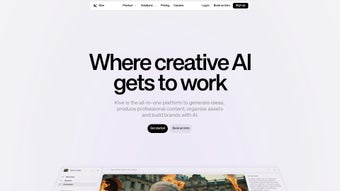
AI Canvas, created by the forward‑thinking team at Kive, is a subscription‑based web application that belongs to the fast‑growing AI Design category. Officially launched on Softonic on August 1st, 2024, the platform promises to reshape how designers, marketers, and developers produce visual assets for web projects. By harnessing cutting‑edge machine‑learning models, AI Canvas can generate whole‑page mockups, layout variations, color palettes, typography pairings, and even content‑aware graphics in a matter of seconds.
This speed translates into tangible time savings: tasks that once required hours of brainstorming and iterative refinement can now be completed in minutes, allowing teams to focus on higher‑level strategy and brand storytelling.
The application runs entirely in the browser, eliminating the need for bulky installations or frequent patch cycles. Compatibility is broad, covering every major browser—Chrome, Firefox, Safari, Edge, Opera, and even legacy Internet Explorer modes—so organizations with diverse device policies can adopt the tool without additional configuration.
Security is baked into the service: all data is transmitted over HTTPS, stored with AES‑256 encryption, and isolated per workspace, ensuring that proprietary design assets remain confidential.
While the editorial team has not yet performed a hands‑on deep‑dive, early user feedback highlights AI Canvas’s ability to accelerate design workflows while preserving creative control. The subscription model delivers continuous AI model upgrades, fresh template libraries, and priority support, keeping the tool aligned with the latest design trends and technical standards.
Whether you’re a solo freelancer looking for a rapid prototyping companion or a large agency managing dozens of client sites, AI Canvas offers a secure, cloud‑based environment that scales with your needs.
Core Features of AI Canvas
AI Canvas distinguishes itself through a rich set of AI‑driven capabilities that streamline every stage of the web design process. Below is a detailed, SEO‑friendly overview of its most impactful features, each engineered to help users create polished, conversion‑focused designs faster and more efficiently.
- AI‑Generated Layouts: Input a brief, and the engine produces multiple responsive layout options that automatically adapt to desktop, tablet, and mobile screens, complete with SEO‑friendly heading structures.
- Smart Color Palette Engine: By analyzing brand guidelines or uploaded imagery, the tool suggests harmonious color schemes that meet WCAG 2.1 contrast ratios, ensuring accessibility compliance out of the box.
- Typography Recommendation System: Leveraging a curated font‑pairing database, AI Canvas suggests typefaces that enhance readability, hierarchy, and brand personality.
- Content‑Aware Image Generation: Upload a concept sketch or photo, and the AI creates complementary graphics, icons, or background patterns that blend seamlessly with the design.
- Version Control & Collaboration: Built‑in history tracking lets teams revert to previous design states, comment on specific elements, and resolve feedback without leaving the canvas.
- Export Options: One‑click export to HTML/CSS snippets, SVG files, high‑resolution PNGs, or PDF mockups, ready for immediate integration into development pipelines or client presentations.
- Integration Hub: Native connectors for Trello, Asana, Slack, and Jira enable automated task creation, status updates, and design handoff notifications.
- Continuous Learning Updates: Monthly AI model upgrades incorporate the latest design trends, pattern libraries, and usability best practices, keeping your work fresh.
Each feature follows a user‑first philosophy. For instance, the AI‑Generated Layouts not only propose visual structures but also embed semantic HTML tags, improving both aesthetics and search engine visibility. The Smart Color Palette Engine evaluates contrast in real time, reducing the risk of accessibility violations before they reach production. Moreover, the platform’s export capabilities produce clean, minified code that developers can drop straight into their repositories, dramatically shortening the handoff cycle. By consolidating these capabilities into a single cloud‑native solution, AI Canvas eliminates the need to juggle multiple plugins, desktop applications, or separate AI services, resulting in a smoother, more secure design workflow.
Installation & Usage Guide
Because AI Canvas is a cloud‑native solution, the installation process is remarkably straightforward—no downloads, no system‑level permissions, just a browser and an internet connection. Follow these steps to get started quickly and make the most of the platform’s AI‑assisted features.
- Create an Account: Visit the official AI Canvas landing page and click “Sign Up.” Registration can be done with an email address or through single‑sign‑on using Google, Microsoft, or Apple IDs, streamlining team onboarding.
- Select a Subscription Plan: Choose between Individual, Team, or Enterprise tiers. All plans include a 14‑day free trial, allowing you to explore the full feature set before committing.
- Verify Your Email: A verification link is sent to your inbox. Clicking it activates your account and unlocks the dashboard.
- Set Up Your Workspace: After logging in, create a new project, name it, and select a starter template (e.g., landing page, dashboard, blog). You can also import brand assets such as logos, style guides, or existing UI kits.
- Enter Your Design Brief: Use the natural‑language prompt box to describe the desired outcome. For example, “Create a modern, minimalist homepage for a SaaS product targeting small businesses.” The AI processes the request and returns a set of design concepts within seconds.
- Iterate and Refine: Choose a concept you like, then use the side‑panel tools to tweak layout sections, adjust colors, replace images, or fine‑tune typography. The AI continuously learns from your modifications, offering smarter suggestions on the fly.
- Collaborate in Real Time: Invite teammates by sharing a secure link. Collaborators can comment, suggest changes, or directly edit elements, all logged in the version history for full auditability.
- Export & Deploy: When satisfied, click “Export.” Choose your preferred format—HTML/CSS, SVG, PNG, or PDF—and download the files. You can then integrate them into your existing codebase, CMS, or design system.
The user interface is intentionally clean, with a dark‑mode option for comfort during long design sessions. Keyboard shortcuts for common actions (e.g., ⌘+Z for undo, ⌘+S for save) are supported across browsers, enhancing productivity for power users. Additionally, AI Canvas offers an extensive knowledge base, live webinars, and video tutorials, ensuring that even newcomers to AI‑assisted design can master the platform quickly. For teams that require governance, admin controls let you enforce permission levels, set expiration dates on shared links, and monitor usage analytics—all from the same dashboard.
Compatibility, Pros & Cons
AI Canvas is built on modern web standards, making it compatible with virtually every operating system that can run a contemporary browser. Whether you’re on Windows 10/11, macOS Ventura, Linux distributions, Chrome OS, or even iOS/Android devices via a mobile browser, you’ll experience identical performance. The platform supports Internet Explorer (in legacy mode), Firefox, Opera, Safari, and Chrome, ensuring that teams with diverse device policies can all participate without additional configuration.
Pros
- Instant AI‑generated design concepts dramatically reduce brainstorming time.
- Browser‑based, eliminating the need for local installations, updates, or license keys.
- Secure cloud environment with end‑to‑end encryption for all user data and granular access controls.
- Extensive export options that fit directly into development pipelines, including clean HTML/CSS and SVG.
- Continuous AI model updates keep the tool aligned with the latest design trends and accessibility standards.
- Robust collaboration features, such as real‑time commenting, version history, and multi‑user editing.
- Responsive design interface works on tablets and large‑screen smartphones, extending usability beyond the desktop.
- Integration hub connects with popular project‑management and communication tools, automating workflow handoffs.
Cons
- Subscription cost may be a barrier for hobbyists or very small freelancers.
- Dependence on a stable internet connection; offline work is not supported.
- Learning curve for users unfamiliar with AI‑driven design terminology and prompt crafting.
- Some advanced customizations still require manual CSS or JavaScript adjustments.
- Exported code may need further optimization for high‑performance production sites.
- Legacy browser support (Internet Explorer) runs in a reduced‑feature mode, limiting some AI capabilities.
Overall, the advantages of AI Canvas—speed, security, cross‑platform accessibility, and a feature‑rich ecosystem—outweigh the few drawbacks, especially for professionals who value rapid iteration and collaborative workflows. The subscription model guarantees regular enhancements, which is a significant benefit in a field that evolves as quickly as AI‑assisted design.
Frequently Asked Questions
Is AI Canvas really free to try?
Yes, AI Canvas offers a 14‑day free trial for all subscription tiers. You can explore every feature without entering payment details, and you may cancel anytime during the trial period.
Can I use AI Canvas on a mobile device?
The platform is fully responsive and works on modern mobile browsers, though the best experience is on a desktop or laptop with a larger screen for detailed design work.
How secure is my data in AI Canvas?
AI Canvas uses HTTPS encryption for data in transit and AES‑256 encryption at rest. Your projects are stored in secure cloud servers, and you can control access permissions for each workspace.
Does AI Canvas integrate with existing design tools?
Yes, you can import assets from Figma, Sketch, or Adobe XD, and exported files can be opened in those tools for further refinement if needed.
What kind of support does the subscription include?
All paid plans include priority email support, live chat during business hours, and access to a growing library of tutorials and webinars.
Conclusion & Call to Action
AI Canvas represents a significant step forward for designers who want to blend creativity with the efficiency of artificial intelligence. Its browser‑based architecture, extensive feature set, and secure cloud environment make it a compelling choice for individuals and teams alike. While the subscription cost may be a consideration, the productivity gains and continuous AI improvements often justify the investment, especially for agencies handling multiple client projects.
Ready to accelerate your web design workflow and unleash AI‑driven creativity? Download AI Canvas today and start your free trial—your next breakthrough design could be just a prompt away.



.png)